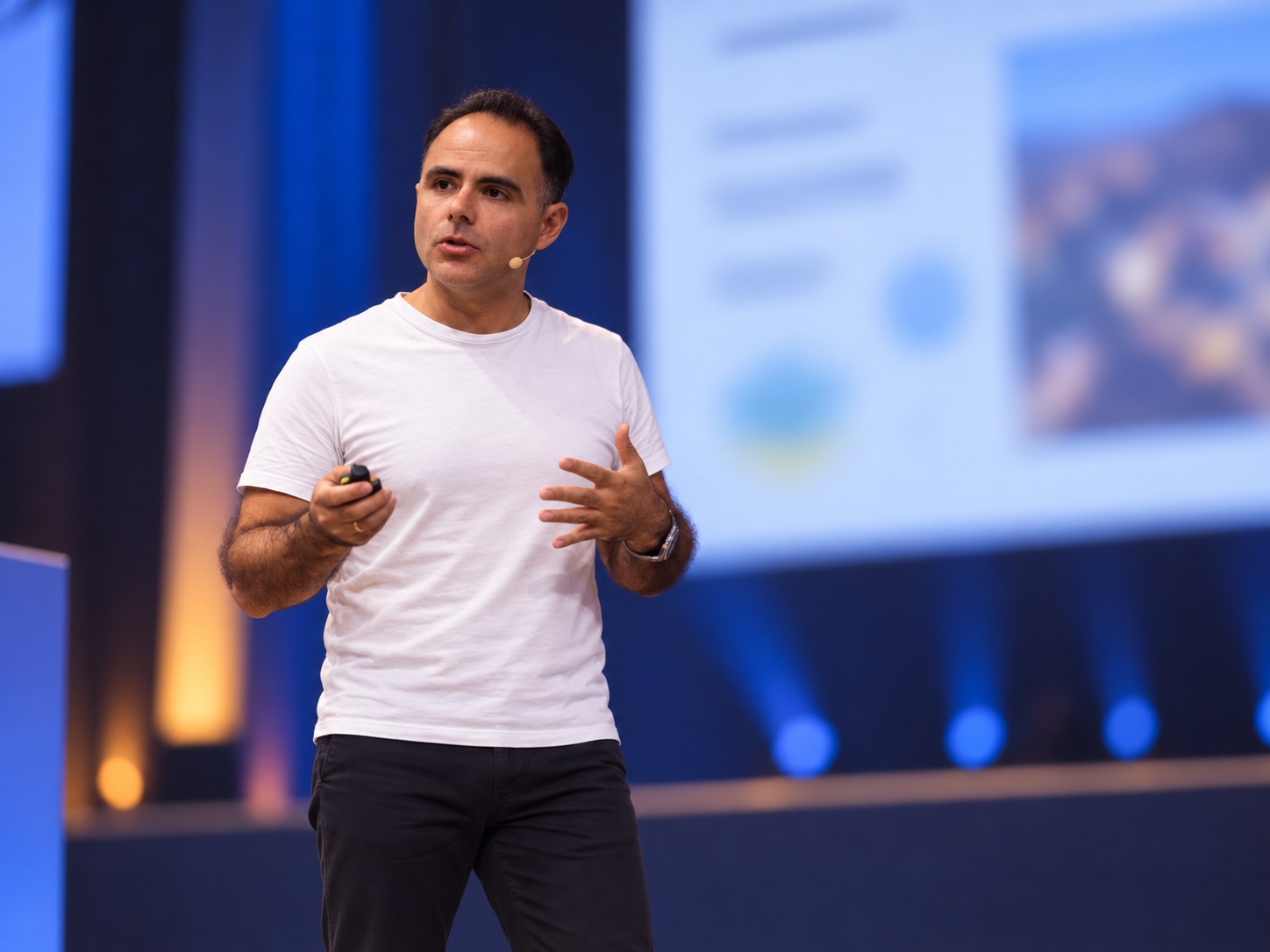
Most of my work begins with a simple question.
What would it take for an intelligent system to be not merely impressive, but genuinely dependable?
I am a research scientist and builder working across AI safety, foundation models, natural intelligence and practical software. I tend to work where these threads meet: evidence and uncertainty, representations and abstraction, rigorous research and useful things.
From useful to reliable
I spend much of my time thinking about AI safety through uncertainty quantification and management. AI can already do impressive things, but usefulness is not the same as reliability.
I believe that managing uncertainty is what lets AI move from something people use to something they can rely on, in everyday life and even more so in medicine and other high-stakes settings. A dependable system should recognise weak evidence, express uncertainty meaningfully and change its behaviour accordingly.
That requires more than a confidence score added at the end. It means designing risk controls around decisions, multi-step workflows, changing conditions and the feedback produced by the system itself.
For me, uncertainty is not a warning attached to an answer.It is part of how an intelligent system should decide what to do.
Experience, put to work
Across fields and places
My professional path has taken me across Mexico, France, the United States, Finland, Germany and Luxembourg. Along the way I have worked in industry and academia, including Thales, Arizona State University and TU Darmstadt, across software engineering, computer graphics, machine learning, intelligent systems and research leadership.
Academic training in computer engineering, embedded systems, algorithms and machine learning eventually led to a PhD in Computer Science. More importantly, this path taught me to move carefully between disciplines and to test ideas against both evidence and use.
Today, I bring that experience to companies making consequential decisions about AI, software and R&D. This can mean reviewing architecture, assumptions and technical risk; structuring a research programme; planning a research-to-product transition; or providing ongoing scientific and technical guidance.
Foundation Models
Beyond language
The success of foundation models for text raises a broader question: what actually made that success possible, and how much of it can travel to other domains?
I am interested in representations that can be reused across contexts and recombined in unfamiliar ways. This is the kind of structure that could support foundation models for vision, robotics and systems that must perceive, act and learn over time.
Research, then reality
I enjoy theory, but I do not see research as finished when the paper is written. I like following the path from a strong question to an experiment, a robust software architecture and, eventually, a capability or product that matters.
EyeTrustAI is where I pursue that translation for risk-controlled AI: turning research questions into methods, and methods into systems that can operate under real constraints.
Burrito’s Labs gives the same instinct a more playful and immediate outlet. There I design and build apps, games and specialised tools, moving from a need or curiosity to something people can actually use.
Natural Intelligence
Behind these questions sits an even older one: what is intelligence? My interest reaches beyond artificial intelligence to natural intelligence: how abstractions are formed and recursively reused, whether they help explain generalisation, and what they reveal about the computational limits of current models.
I am interested in whether those principles can be made computational, not by imitating the surface behaviour of intelligence, but by identifying the mechanisms that make abstraction, transfer and continued learning possible.